When you think of the women of Easter, whose faces come to mind?
Certainly Mary, the mother of Jesus, who faced a horror no mother should face as she watched her beloved Son die an agonizing death on a cross.
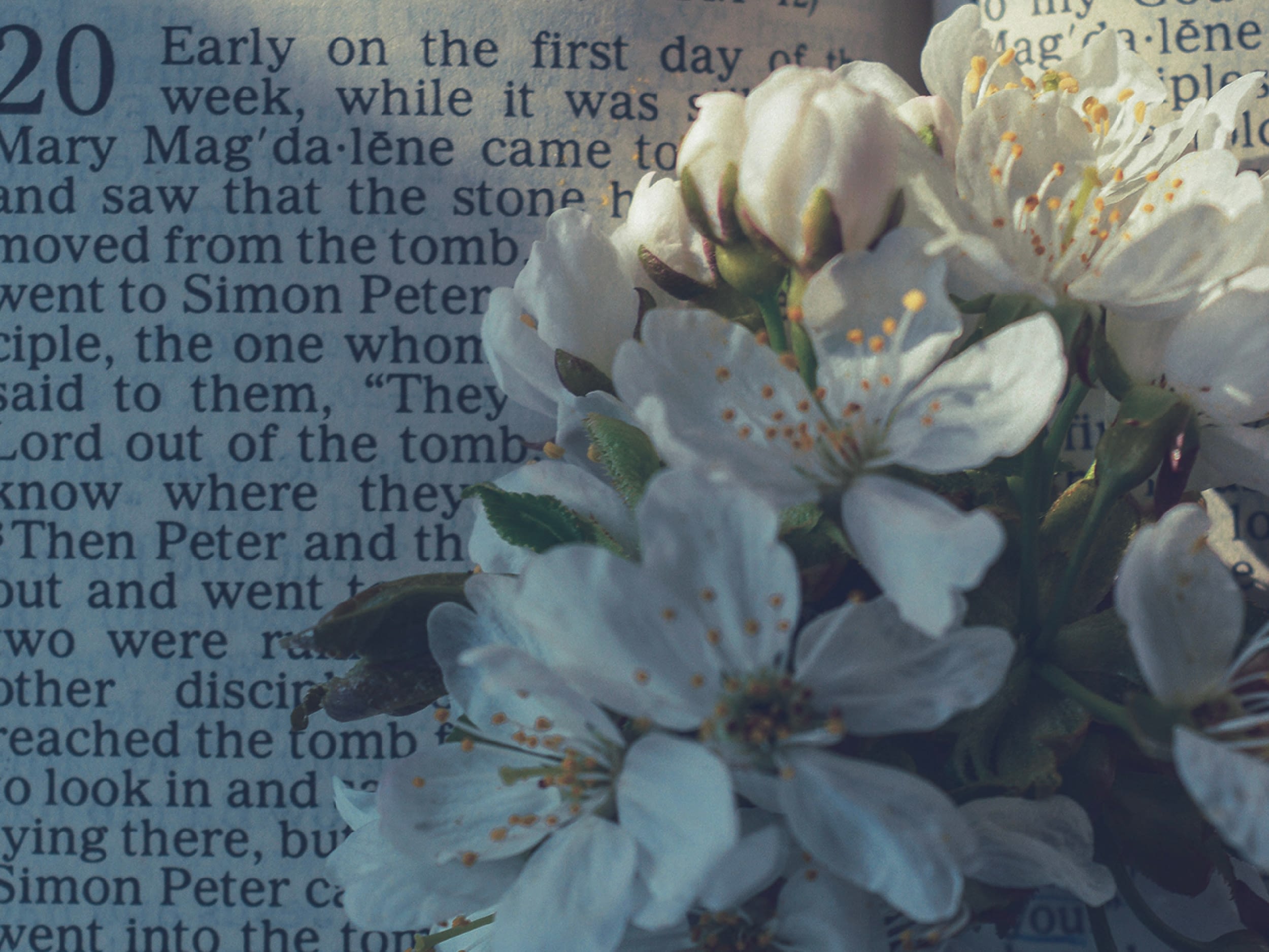
You may also think of the three women who rushed to the tomb at first light to finish anointing Jesus’s body for burial. God granted Mary Magdalene the honor of being the first to see the risen Christ as she wept at His tomb.
But Easter wouldn’t have been Easter without four other significant women. We seldom think of them in connection with that world-changing Sunday so long ago, but each played a crucial role in the resurrection drama.
Four Significant Women
Tamar
When we read Jesus’s genealogy in Matthew 1, Tamar’s name is the first female name we encounter. The fact that her name appears on the list is surprising because in the patriarchal society of ancient Israel, women were seldom mentioned in birth records.
And yet—there’s Tamar—listed as one of Christ’s ancestors (v. 3).
The fact that Tamar entered Christ’s genealogy in a decidedly unorthodox way makes her inclusion even more significant. Widowed twice to evil brothers and left without children, Tamar was desperate. Custom required her father-in-law, Judah, to arrange for his last son to marry her, but because he’d already lost two of his sons after they married her, he refused. So Tamar took matters into her own hands.
She disguised herself as a prostitute and tricked Judah into fathering children with her—twin children, Perez and Zerah. Perez became the ancestor of Jesus and fulfilled the prophecy that the Messiah would be born from the tribe of Judah (Genesis 49:10).
Tamar’s story is sickening for many reasons: two wicked husbands, a father who failed to meet his daughter-in-law’s needs, Tamar’s desperate act to provide for herself, and a broken cultural system that left the widowed and childless with little recourse.
And yet—God redeemed all that brokenness by bringing about something good. Better than good. Glorious, and life-giving, and heavenly—through Tamar’s tragedy, He continued the family line that brought forth Easter’s Messiah.
Rahab
Rahab didn’t disguise herself as a prostitute—she was one. And yet we find her name listed behind Tamar’s in Jesus’s genealogy (Matthew 1:5). Rahab is perhaps the most well-known resident of Jericho, the first city the Israelites planned to conquer.
Like the other residents of the town, she’d heard stories of how the Israelites had conquered nations east of the Jordan. Unlike her countrymen, however, she believed in the God of Israel and declared her faith. “The Lord your God is God in heaven above and on the earth below” (Joshua 2:11). She demonstrated her faith by hiding the Israelite spies and bargaining with them for her life and the life of her family members.
In a redemption story far better than fiction, she married Salmon, one of the spies, and gave birth to Boaz, who would one day marry Ruth. The writer of Hebrews listed her in the “Faith Hall of Fame” (Hebrews 11), and Scripture records her part in our Messiah’s genealogy.
Ruth
Matthew 1 spotlights another crucial member of the Easter drama, the Moabitess Ruth (1:5). Like Tamar, she was widowed and childless. Like Rahab, she came from a nation that worshipped foreign gods. When Ruth’s husband died, her mother-in-law, Naomi, an Israelite, urged her to go back to her people.
But Ruth wouldn’t go. She’d placed her faith in the one true God. There was no future in her old life. “Where you go I will go, and where you stay I will stay,” she told Naomi. “Your people will be my people and your God my God” (Ruth 1:16).
Ruth traveled to Bethlehem with Naomi, and met and married Rahab’s son, Boaz. God redeemed her loss, rewarded her faith, and allowed her to become the great grandmother to King David, one of the most famous ancestors of Jesus the Messiah.
Bathsheba
Bathsheba was the granddaughter of King David’s counselor, Ahithophel, and the wife of Uriah. David summoned Bathsheba while her husband was away at war—abusing his power as king to exploit her—and Bathsheba became pregnant with David’s child.
Desperate to hide his sin, David ordered Uriah’s death on the battlefield and took Bathsheba as his wife. Tragically, their child died, but later God gave them another son, Solomon, the wisest man who ever lived. Because of Bathsheba’s courageous and timely actions to foil a plan to supplant Solomon from the throne (1 Kings 1), Solomon took his place as Israel’s king and led the country into an unprecedented era of peace and prosperity. He also became the forefather of the Messiah (Matthew 1:7).
The Women of Easter
I love hearing the stories of Mary, the mother of Jesus, keeping faithful vigil at the foot of the cross, and of Mary Magdalene, Salome, and the other Mary, whose loyal, courageous love led them to anoint Jesus’s body on the first day of the week. But let’s not forget the women who lived hundreds of years before Christ and who God used to make His life, death, and resurrection possible.
These women are part of the Easter story because the Easter story is one of redemption, reconciliation, and restoration. Their stories are historical proof that God’s purpose, even before Christ came, was to seek and to save the lost. Their lives demonstrate how He works out His plan of redemption one person at a time—saving, cleansing, and keeping.
Are you a Tamar, trapped by circumstances beyond your control?
Are you a Rahab, longing for a new beginning? ?
Are you a Ruth, knowing the past has no place for you and wondering what the future holds?
Are you a Bathsheba, victimized by others and looking for a way forward?
Each woman in the line of Christ desperately needed God—not as an escape from their circumstances, but as a Savior for their souls.
So do we.
When we repent of our sins and trust in Christ as our Savior, we join Tamar, Rahab, Ruth, and Bathsheba in the family of God. We become one of the unexpected women of Easter.
—Written by Lori Hatcher. Used by permission from the author.