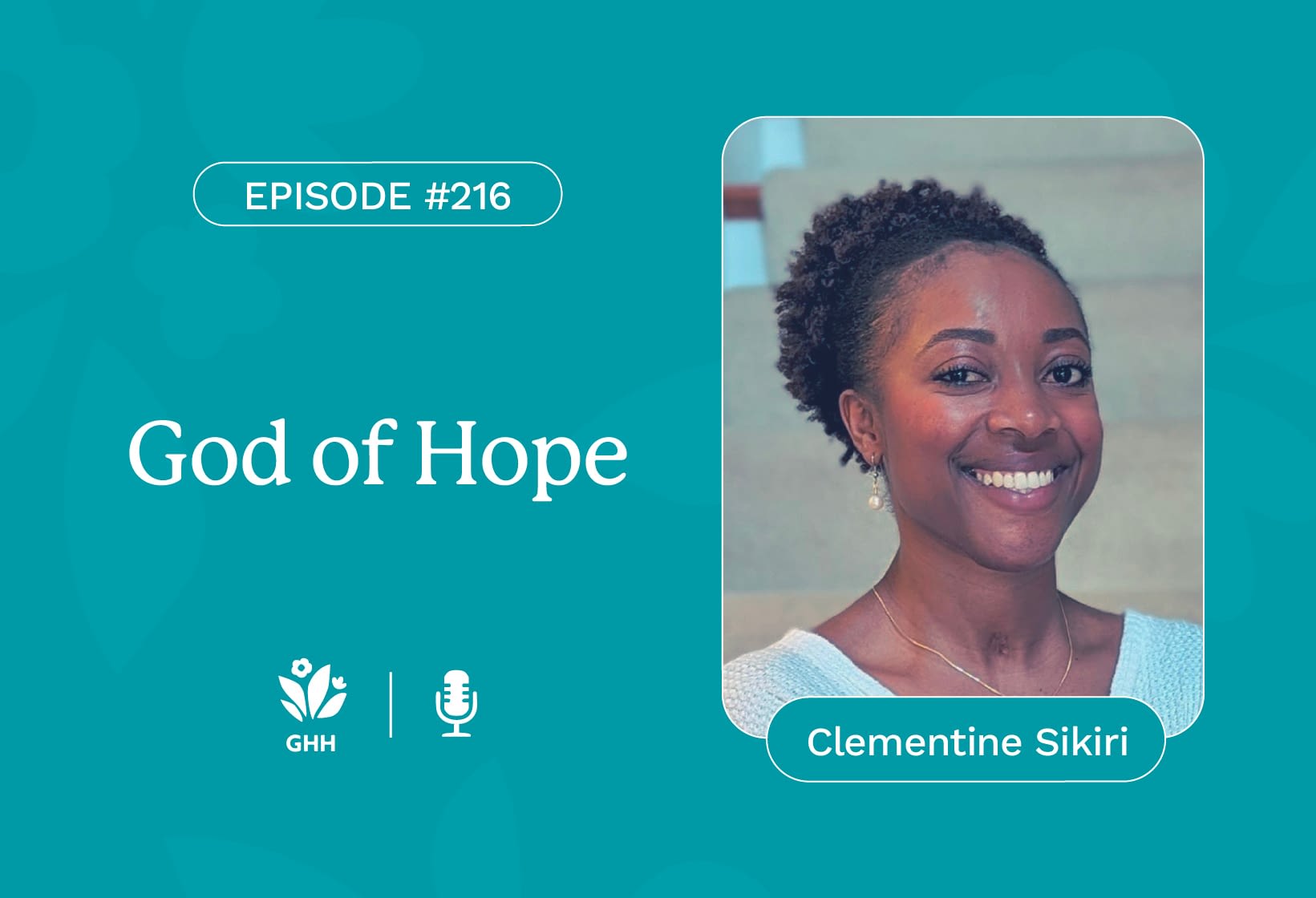
God of Hope
About this Episode
Episode Summary
What was a moment in your life where you felt extreme hopelessness? How did God restore your hope? Clementine Sikiri has experienced many hopeless moments in her life where she had to depend on God to make the impossible, possible. Join hosts Elisa Morgan and Vivian Mabuni as they learn how Clementine’s hope was restored as a refugee coming to the United States and then as a severe car accident survivor. You don’t want to miss this beautiful and encouraging God Hears Her conversation!
Episode Transcript
God Hears Her Podcast
Episode 216 – God of Hope with Clemetine Sikiri
Elisa Morgan & Vivian Mabuni with Clementine Sikiri
[Music]
Eryn Adkins: You are listening to God Hears Her, a podcast for women, where we explore the stunning truth that God hears you. Join our community of encouraging one another and learning to lean on God through Scripture, story, and conversation at godhearsher.org, God hears her. Seek and she will find.
Vivian: Elisa, I love the opportunity whenever we have the chance to have guests on God Hears Her… ones that can help us to recognize that life is bigger than our little worlds. That there’s a big world out there, and a big God. And I love the fact that we can focus in today on our guest, Clementine Sikiri. She is originally from Eastern Democratic Republic of Congo and during the war, fled to a refugee camp in… Rwanda and then… immigrated to the United States… was resettled in Michigan twenty-two years ago. She’s a graduate of Grand Valley University… she is such an incredible person… but we get to hear her story today… the challenges she’s walked through, not only growing up and being resettled in the United States and also… a horrendous car accident that she survived and her recovery process… we are just so grateful to have the chance to be able to talk with you and have you share your story, Clementine. So, thank you for being here. We’re just going to dive right in, like, we would love to start off and just hear about your faith journey. How did you become a Christian, what is your story?
Clementine: Yeah, yeah. I… first of all, thank you for having me. I am honored to be here, and that was a great introduction, so thank you… well, it starts, I guess, when I was born…1994… I was born in a… in a war zone in the country that was torn. So… the first… the years of my life, it… war is all I knew before I understood the world. So, I thought the whole world was that way because I was… I didn’t understand… and my family were fleeing and they fled to Rwanda, and these were the years before I was even old enough to go to school. So, a lot of it I don’t understand. But… a lot of the feelings that I felt, I still remember those feelings.
Vivian: Yeah.
Elisa: What was it like, you know, when you said you were raised in a time of war, what did that feel like, look like for you?
Clementine: Yeah, I still remember this. So, this is from experience… I know as I got older, my family told me more information over time. But what I remember is just being in the house and hearing gunshots and hearing, oh, we have to go. We have to go. We have to go, and grabbed whatever we can and run…
Vivian: Wow.
Clementine: … and when we felt that it was… run into the woods or somewhere, and when we felt that it was safe to come back, we’ll come back…
Vivian: Yeah.
Clementine: … and when the same thing happens, we go, and sometimes my family would just, like, run different directions. So, where… we’ll be… I would just be… me and my dad, and I don’t know my siblings are, and we’ll reunite back at home. And then it… it just eventually got to a point where we just had to leave…
Vivian: Yeah.
Clementine: … and flee, and leave the country because if we didn’t, then we… we… we would die.
Vivian: Right.
Elisa: And then you come to the United States and make a new life. I mean, I know you have a huge heart for refugees, and it’s, like, obvious why…
Vivian: Yeah.
Elisa: … Right? I mean, when you’ve experienced something like that, don’t you think God just uses those moments in our lives…
Clementine: Yes.
Elisa: … to call us to that kind of connection with others?
Clementine: Yes. When my family fled the… Goma, the town in Eastern Congo, we lived in refugee camp for several years. So, in the refugee camp, that’s when I started going to school. So, I went to first grade in a refugee camp, second grade and third grade. And that’s where I started learning how to read. And that was just my world. Refugee camp is really where I remember most of my childhood… and the refugee camp is, I would describe it as probably the most hopeless place to live because you rely on others to feed you…
Vivian: Right.
Clementine: … to just take care of your basic needs… and it’s a place where you just sit and wait for resettlement and… Resettlement is not guaranteed. So… I’ve always, like… I’ve always wondered like, why… why am I… why am I going through this? But again, I really… I thought everybody were going through this because I didn’t know life outside of the refugee camp. I didn’t know outside… out… a life outside of a war.
Vivian: Right.
Clementine: So, it wasn’t until we actually arrived here that I was like, wait, what? People live here… and that was just… that was a culture shock.
Elisa: Shocking.
Vivian: Yeah.
Clementine: Very shocking. That’s when I started realizing how big the world is. Yes.
Vivian: So, when you were… when… was your first place Michigan? Or did you go to other places in the United States?
Clementine: Yeah, so, my family, I remember the first city we ever saw was Chicago.
Vivian: Oh, wow.
Clementine: So, we were just, like, I don’t even know the word, baffled, I guess… and we drove from Chicago to Grand Rapids. So, we were… resettled in Grand Rapids, Michigan.
Vivian: Okay.
Clementine: And yeah, we never left. So, I guess we… we love it here. Yes.
Vivian: That’s… that’s so different, climate, culture, all of those things. How did you navigate the changes?
Clementine: Everything is different. Every single thing was different. I… My family struggled. Obviously, the language barrier, the cultural shock… schools were different.
Vivian: Right.
Elisa: You didn’t speak English too much, did you?
Clementine: Not at all. I didn’t speak English at all, so… I remember when I… I arrived, I went to fourth grade. I had just completed third grade, and just the whole year, I didn’t say anything because… I’m a talkative person. I consider myself to be extroverted. But the whole year, I was just silenced because I was just taking everything in, and I was confused, and I didn’t know what was happening. And I just… I was just speechless, I guess. But growing up in Grand Rapids area and learning English… learning English was actually easy for us, for my siblings and I, because we’re kids…
Elisa: Yeah.
Clementine: … And kids, we have… our brains are our sponges, so, we just, like, took everything in, the good and the bad…
Vivian: Yes.
Clementine: … So, we learned English… fast, and I noticed the more English I learned, the more I started to understand the… even the world, honestly. Because back home I only spoke Kinyarwanda…
Vivian: Yes.
Clementine: … and my world was very, very tiny. And as I learn English, my world is expanding and expanding, and I’ve always had that thought in my head that, wow, Lord, You created all this. Wow. What else have You created?
Vivian: Wow.
Elisa: So, you’re talking about God now. How did you come to know Him?
Clementine: I was very fortunate to grow up in a home… that was a Christian, that believed in God… so, my whole childhood, when it was safe in the refugee camp, we went to church… My family… it’s a Seventh-day Adventist Christian, so we kept the Sabbath, and we went to church every Saturday, and when we moved here, we also joined a local Seventh-day Adventist Church. So, we were still… going to that church even though it was still a cultural shock, because the entire church is just different from church back home…
Vivian: Yes.
Clementine: … in English… it’s all white people. We are not used to that…
Vivian: Yes.
Clementine: … we… we just don’t know how to even interact… but in the community that I lived in, we had… those churches in the community that care for the community. So, we attended other churches, too, that were not necessarily Seventh-day Adventist Church. So, the… in the community we grew up in, they had… vacation Bible school, so we used to go to that. We just went to everything, book club, we just… we were just so excited…
Elisa: You’re like sponges. Yeah.
Clementine: Yeah. We were just exposed to a lot of things, and I was just learning about the Lord in different denominations, too…
Vivian: Yeah.
Clementine: … which never happened before… and as I started getting involved in the church in my community, as a young girl I just started like learning who God is, and I’ve just been learning about Him since.
Vivian: So, Clementine, you mentioned being a refugee. What does it mean to be a refugee and what is that process of being resettled in the United States?
Clementine: One of the biggest misconception is… that refugees choose to become refugees. We… it’s life or death… we don’t choose that.
Vivian: Right.
Clementine: Also, another big misconception is… just the difference between refugees and immigrants… it… it’s confusing, I know…
Elisa: Yeah.
Clementine: … so… refugees are obviously immigrants. Immigrants are people who move to a different country to live there… refugees… So, refugees are immigrants, but immigrants are not refugees necessarily cause some of them made the choice to move here for a better opportunity for a job. And also… this is… very shocking to me, but only one percent of refugees are eventually resettled. So…
Elisa: Now, what does that mean, if… if they’re not resettled?
Clementine: Yes. So, my family was a part of the one percent. I still don’t understand how…
Vivian: Right.
Clementine: … so, those who are not resettled… either go back to their home country when they feel that it’s safe, some of them just stay in the refugee camp because my… the refugee camp that I lived in still exists. And to this day, people still live there, and some of them just move out of the refugee camp and try to find life in the country that…
Vivian: Right.
Clementine: … they were… they’re… finding refugee in… so… and some of them who have families who are here… already resettled, that they can petition for them to come, which is something that Bethany Christian Services did as well… for example, when my family was resettled, my beloved grandma was left behind. And that was devastating because she was like a mother to me. She raised us…
Vivian: Right.
Clementine: … so, it was hard leaving her behind and not knowing if she… if I’ll ever see her again…
Vivian: Right.
Clementine: … because it’s a reality that you don’t get to see some family members. It took ten years… ten years for her to finally be resettled.
Vivian: Wow.
Clementine: Ten years… and now she’s here, and it’s great. And it’s just God’s hand in all this…
Vivian: Yeah.
Clementine: … Yes.
Vivian: Yeah.
Elisa: I appreciate your question, Viv, because it is… we politicize it when God is very clear that He loves every single human on the earth…
Vivian: Yeah.
Elisa: … And each life is precious to Him. So, refuge, the whole concept is one of protection.
Vivian: Yeah.
Elisa: And, you know, an idea that God had, you know, way back. So, it’s… I think we’ve harshened that word… made it harsher instead of understanding…
Clementine: Yeah.
Elisa: … God’s compassionate heart.
Vivian: Yeah.
Elisa: All of us, if you think about it, are refugees in a foreign land…
Clementine: Yes.
Elisa: … cut off from our God, and from His image of who He created and imagined us to be…
Clementine: Yeah.
Elisa: … All of us need a place to resettle in His world, in relationship with Him. And all of us belong to His body. So, I think it’s a beautiful word. I’d love to see us grasp it…
Clementine: Yes.
Elisa: … And, you know, bring… integrate it more into who we are.
Vivian: I think, too, I’ve been… I finished my last seminary class and it was on the Old Testament, and we studied just the… the through line that there were two things that brought in so much anger… God’s anger was towards idolatry and social injustice because He wanted the… widow, the orphan, the foreigner, the refugee, to be cared for by God’s people. And that was what He was most upset about, and it just is this constant through line. So, as believers, we are to have hearts that are welcome…
Clementine: Yes.
Vivian: … to bring in the foreigner and the refugee, and that that was part of… God’s vision that people would then worship Him…
Clementine: Yes.
Vivian: … And there’d be so much gratitude because it was experiencing the whole community coming alongside. I would love to hear about the type of community, did you have others that were from the refugee camp that came to Michigan? Or were you the only one, your only family? How was that for you? How did you build community?
Elisa: Good, good question.
Clementine: So, my family, when we were resettled back in 2003, we were the only refugee family that we knew.
Elisa: Wow.
Clementine: So, it was extremely difficult to navigate the system as refugees.
Elisa: Did you live with another family or how did that work?
Clementine: Yeah, we lived… so, we were resettled by… Bethany Christian Services, actually. And with… with resettlement, they help you for ninety days and then you are… I know, and then you’re on your own.
Elisa: Yikes.
Vivian: Wow.
Clementine: They expect you to know everything, but nine…
Elisa: How about nine months? Yeah.
Clementine: Right… So, for the first ninety days, you know, they took care of bills, just other… they showed us how to use a microwave, stove, like these things…
Vivian: Wow, yeah.
Clementine: … that we didn’t have back home. Just basic things, how to… Mailbox, what… what is it? What does it do?
Vivian: Right.
Clementine: … Things that…
Elisa: A lot to learn.
Clementine: … basic to the average American, but to us it’s so foreign.
Vivian: Completely different, right.
Clementine: Foreign. So, we had volunteers… people who give their time to… work with the vulnerable population, you know, the other believers who believe that they are called to help… people like… like my family. So, we had volunteers come in and show us how to make ramen noodles in the microwave. That was nice… [chuckling] just like, you know, when you go swimming, like, what do you… proper wear, what to wear…
Vivian: Yeah.
Clementine: … what to wear to a place… just basic things, like how to have… hold a conversation with someone here because in different cultures… that looks different.
Vivian: That’s right. That’s right.
Clementine: So, just little, tiny things… that makes a huge different… difference was really helpful. And then over time… the US… accepted more refugees, and more refugees come specifically to West Michigan because they either have family or friends, and there’s a larger refugee community which means that there’s more resources or there should be more resources…
Vivian: Right.
Clementine: … That’s something that we’re still working on.
[Music]
Jade Gustman: Hey friends, I’m just popping in to tell you about our monthly reading plan. This month you can check out ten days of God Loves Her. Find that reading plan in our show notes.
Elisa: So, life scoots along. And obviously, like we just said, you know, you come from a refugee background and you’re working now with refugee populations, you have a passion for them, but something else happened in your life. And Vivian, you referenced it… a surprise slash shocking event that nearly took your life.
Clementine: Yeah… so, this was six years ago, and I cannot believe it, that’s… it’s been six years already, but in 2019, right before COVID got crazy… I was involved in a car accident. Right before my car accident, that’s when I was actually working with refugees. I was working for…
Elisa: Okay.
Clementine: … Bethany Christian Services with the refugee resettlement. So, it was another dream job of mine…
Vivian: Yes.
Clementine: … I was… the first caseworker with refugee families and I was able to speak to them in the language that they understood. And I just… I just couldn’t believe I was getting paid to do that job… and I had just graduated… college, too and…
Vivian: Wow.
Clementine: … just being first generation. So, I was just, like, over the moon. And… during my time at Grand Valley, I also joined a Bible study, so, like, my relationship with God has grown and expanded, and I had just purchased my first car as well…
Elisa: Woo woo! Yep.
Elisa: Wow.
Clementine: … I was happy. And I felt that… I felt like I belonged to the Lord, and I was His child, and He sees me. I felt good. And then my accident happened… Right out of nowhere. So, I went to Steak ‘n Shake around, like, eleven thirty at night to get a milkshake, cause I was just… I was craving a milkshake, okay…? And then on my way home, close to midnight, I was… T-boned by a cement truck in my new car. And…
Vivian: Oh, Clementine.
Clementine: … I blacked out. I don’t remember that. My brain blacked it out, which is another cool, like, testimony about how God created us and our brain. So, I don’t remember that impact, but I do know I was internally decapitated, so I tore my C1 and C2…
Elisa: Okay. Internally…
Clementine: Yeah.
Elisa: …decapitated…
Vivian: Wow.
Elisa: … I mean…
Clementine: Yes. So, my C1 and C2 were shattered.
Elisa: So, is it like your… your muscles are holding your head in place.
Clementine: Yes, basically.
Vivian: Basically, yeah.
Elisa: Cause your bones are…
Clementine: That… That’s how they explained it to me. My muscle were just holding my head…
Elisa: Okay.
Clementine: … and I obviously had a traumatic brain injury as well…
Vivian: Yeah.
Clementine: … and other… also, other injuries… I… I broke my jaw, I broke my femur…
Vivian: Oh, wow.
Clementine: … so… I was unconscious. And… a week later, I woke… I woke up in the ICU and… in a… a medical-induced coma…
Vivian: Right.
Clementine: … so, I couldn’t move anything except for my left index finger. So, I… I… I didn’t know how to say no…
Elisa: You’re pointing it right now.
Vivian: Right.
Clementine: Yeah. No, no. So, I still… I couldn’t talk. I had a… a… a trach as well. So, yeah, I could only move my finger at that time.
Vivian: Wow.
Clementine: I still remember my react… feeling that I had when they told me I was involved in a car accident. I wasn’t, like, devastated. I was just like, wait, what? What’s going on? I was just still in shock. I… I learned that a lot of people in the ICU don’t make it out of the ICU, and… they kept saying how young I was, and I was twenty-four at the time and… two weeks later, so, I was in ICU just two weeks, I was transferred to Mary Free Bed to start… therapy…
Vivian: Wow.
Clementine: … and rehab. Yeah, and I had a halo as well… a halo on, which was eleven pounds…
Elisa: Holds your head in place…
Clementine: Yes.
Elisa: … and neck stable.
Clementine: … Yes… so, yeah, I went to Mary Free Bed and… my family were told that I will be paralyzed from neck down, which medically make… it made sense and even… even if I do make it out, I probably would be a vegetable, that’s the word they used. So, when I went to Mary Free Bed and I started seeing just tiny, tiny progress I was just, like, shocked, like, wait, they said I couldn’t do this, but I’m doing it. Wait, they said I couldn’t do this, but now I’m doing it.
Vivian: Wow.
Clementine: And it was just, like, that the whole time I was at Mary Free Bed. It was just… victory every single day. So, I was just so happy, and people did not understand why I was so happy, but also, like, suffering at the same time. But I was just, like, excited that, like, today I got to take my own shower, or today I got to get out of my bed by myself, today I put on my socks.
Vivian: Wow.
Clementine: … Because I had a huge community and friends that were there and just recording little things. Like today, Clementine was able to put on her… her socks. I still remember the first time I was able to speak and say my name. It was shocking.
Vivian: Wow. Were you cognizant, like, aware of the conversations that were going on before you could speak?
Clementine: Yes.
Vivian: Were you conscious and you could hear it?
Clementine: I was. I was, but my family didn’t know…
Vivian: Right.
Clementine: … because they told them I might not be…
Vivian: Right.
Clementine: … and I couldn’t tell them that I can.
Vivian: Right.
Clementine: So…
Elisa: So frustrating.
Clementine: … It was so frustrating. And I could only write with my left hand and I’m right-handed.
Elisa: Right.
Clementine: So… when I was able to actually move my… my hand… so, it took a while for them to know that I was actually…
Elisa: In there.
Clementine: … In there, yeah. It was… that… that it was still me…
Vivian: Yes.
Clementine: … but I know one of my friends told me that they knew I would be fine when I was still saying no with my finger… [laughter]
Elisa: Doing the thing.
Clementine: Like, oh, yeah, Clementine is there.
Vivian: She’s still there.
Clementine: yeah.
Vivian: Wow.
Elisa: You know, I’m hearing a theme… this theme of you said about the refugee camp, that it was a place of very little hope and how you were dependent upon everybody for your basic needs. And then you have this work with refugees and you’re able to contribute and how validating that is, that God used your own pain to redeem the pain of others. Then you have this car wreck, and you refer to the ICU as being a… a very difficult place, and that so many people don’t come out of it. I mean, Clementine, really… an expensive gift that God gave you. One that cost you a lot. You know, what would you say about how to keep going in these difficult times when as a young child you’re like, this is not a very hopeful place. And then as a young woman, who had everything…
Clementine: Yeah.
Elisa: … you were just saying that, I had it all.
Clementine: Yeah.
Elisa: … How did you keep going and what did God reveal to you?
Clementine: Yeah, a lot. He revealed a lot to me… so, one, I knew if the Lord can take me out of that place where I was born…
Vivian: yeah.
Clementine: … He can do anything… even if it doesn’t make sense to doctors. So, I wasn’t shocked that I was still alive, because I just know what God is capable of.
Vivian: Yes.
Clementine: But at the same time, I was like, why did He keep me here?
Vivian: Yeah.
Clementine: … Like…
Vivian: yeah.
Clementine: … it doesn’t make sense. I’m confused… so, I had a lot of… in a way, it confirmed my purpose, in a way because I’ve always just been doubtful, like, oh, am I… is my English good enough? Am I supposed to be here…? But my accident confirmed I am supposed to be here. And God wants me here.
Vivian: Yeah. Yeah.
Clementine: So, it was a confirmation…
Elisa: I love that.
Clementine: … during the suffering. I just knew that I… I was supposed to be here. And I still remember when I was in ICU… my dad wrote down on the paper that the Lord… saved me for a purpose. And… before my accident, I’ve always… wondered, am I living in my purpose? Is this what You want me to do…? Now I walk knowing, oh, this is exactly what He wanted me to do.
Vivian: That’s right. That’s right. That’s a hard, long lesson, and yet I think it centers us to be able to keep on in the challenging times.
Clementine: Yes. So, right now I work as a mental health therapist in middle school. I’ve always loved working with the young kids, and I think it’s maybe the… my childhood… back home because I didn’t get to experience…
Vivian: Yeah.
Clementine: … you know, a loving adult in a safe environment. So, I want… I want to create that for… for kids. And I know it’s something that’s going to impact them for the rest of their lives…
Vivian: That’s right.
Clementine: … So, I know what I’m doing is important… I didn’t see myself going into the mental health field until after my accident is actually when I went back to school to pursue my master’s in social work.
Vivian: Wow.
Clementine: After I was told that I wouldn’t be able to do that because of my traumatic brain injury.
Elisa: Nyah, nyah, nyah. Yeah.
Clementine: So, I proved them…
Vivian: Wow.
Clementine: … wrong [inaudible]… the Lord… so, I decided to… go in this field because I also had to seek services in that area…
Vivian: Right.
Clementine: … and I just wanted to be someone who can hold someone’s hand while… while they’re struggling. And I feel that… the Lord has brought me through so much and it’s almost natural for me to just connect and empathize with people and… show compassion and I… I feel that that’s what was shown to me. And the more I grew up to understand the Lord, the more I grew up to understand that He loved me from the beginning, and… I’m… I’m His favorite… [laughter]
Vivian: That’s right, that’s right.
Elisa: I love that, yeah.
Clementine: … because He, like, yeah, He says, like… “Whatever you do for the least of these, you do unto me.” So…
Vivian: That’s right.
Clementine: … Those who gave the time for me, they were doing it for Him…
Vivian: Yes.
Clementine: … So, I know what I’m doing, I’m doing it for Him.
Elisa: Amen.
Vivian: That’s so beautiful. I love that motivation to build what we wish we had, you know, like that… that’s a beautiful picture because we’re… God creates us with the ability to… to be creative and to lead in ways that we, because of our own experience, have gone… undergone the challenges and then think, oh, I… if I had had this it would’ve helped me in my journey. And then we then are able to create what we wish we had, which is what I see you doing, Clementine, which is really beautiful to behold…
Clementine: Yeah.
Vivian: … Can you share with us a little bit about just your mental health journey after your… after your injury?
Clementine: Yeah, it was a struggle… I come from a background where mental health is not paid attention to as… as physical health is. So, when I left the hospital, they were just happy that I left the hospital. Of course, I was happy too, but I noticed that’s where… when, like, my mental struggle started… because I was forced to sit at home. I’m not a person who sits still. And I had the halo… so… my doctor actually… suggested that I see a… a therapist and I didn’t even know what that meant, or…
Vivian: Right.
Clementine: … I’m like, well, I… I just have to talk about my feelings…? That just… sounded kind of foreign to me… but back at Grand Valley I saw a counselor for a little bit because it was free… and my insurance was going to cover this session, so, I was like, okay, I’ll do it. What… What’s the worst that can happen? And… a lot of my healing came from that because… the Lord used therapy to speak to me… I understood, like, why I was feeling… just sad all the time, and also grateful that He saved me from… from this accident, but also, I don’t want to hurt anymore. And I know that He can take this away as well. If He… if the Lord can save me from that car accident, He can cure me from depression, He can cure me from anxiety, He can cure… cure me from… post-traumatic stress disorder which… which are the three things I was dealing with, and they were affecting me tremendously…
Vivian: Yes.
Clementine: … and it got to a point where I didn’t… I felt that maybe it would never go away. And… hearing doctors telling me, well, chronic pain is normal for someone who’s been through something like this… anxiety’s normal for someone who’s been through something like this… PTSD symptoms are normal for someone who’s been through something like this… but because of just who God is to me, I knew… I just know that yes, it’s impossible to men, but it’s nothing’s impossible with Him. So, even though I… I have a neck fusion and it’s probably been the biggest injury for me… and the most pain. And I just started praying for the pain to just go away. I want… I want my pain left to be a zero…
Vivian: Right.
Clementine: … Not a two, at a zero. And there are days where I forget that I have pain and that’s… that’s… that baffles me because how, and… I just ran the ten K with the Amway Riverbank Run.
Elisa: Whoa. Yep.
Vivian: What?
Clementine: Yes.
Elisa: Gosh, yes.
Vivian: Oh, my goodness, Clementine. My… my emotions are, like, astonished. And then, like, I’m with you in the sadness, and then it’s, like… like I’m…
Elisa: It’s great.
Vivian: … I’m astonished. Keep going.
Clementine: … yes… so, before my car accident, I… I run… I used to run, but then after my car accident, I was just…
Elisa: Sure.
Clementine: … running was… I even… I couldn’t even walk, so…
Vivian: Right.
Clementine: … let’s not think about running… but I made it a mission to do it and I just did things that seemed impossible because I just knew they were possible to the Lord… I sounded ridiculous most of the time… but because of the God that I serve, He… He just proved to people that, oh, He can do it. And people saw His goodness in my life and that… that’s all I want. I want people to see His goodness in my life
Elisa: And set your face towards it. I mean… a lot of people will go, curtains. Done. You know… I don’t want to mess with this anymore. It’s too hopeless. But you have a kind of a perseverance about you. This story of resilience that you’re sharing is so powerful, you know? It’s so encouraging. What would you say to somebody, a woman who’s listening right now and is going, oh my gosh, I wish I had that kind of perseverance…
Clementine: Yeah.
Elisa: … I wish I could believe that our God can do anything, that everything’s possible with Him. But I’m kind of stuck in a spot right now…
Clementine: Yeah.
Elisa: … where I just don’t believe that, or I can’t hold onto that. Maybe they did for you, Clementine, but I’m not sure He could for me. What would you say to her?
Clementine: Yeah. Well, you’re not alone, that’s one…
Vivian: Yeah.
Elisa: That’s good.
Clementine: … because when this happened to me, I just thought, nobody ever… nobody knows what I’m feeling right now, but God knows what I’m feeling because He says He does. I know He knows what I’m feeling and… no matter what life looks like, there’s always hope because… we are humans, so we don’t know everything, but God knows everything…
Vivian: Yeah.
Clementine: … right? And… suffering is a part of life, right…? I know that there’s a… misconception that the more you’re safe from… harm or… the evil of the world, but that’s not true.
Elisa: Don’t you wish it was? But it ain’t.
Clementine: Yeah.
Elisa: No, it ain’t true. Nope, nope, nope.
Clementine: It’s not true…
Elisa: Yeah, yeah.
Clementine: … but it’s so comforting to know, no matter what I go through, He is with me because He promised, and He… He says that to me, and I believe that. I truly do. And… I also learned that our bodies are… well, they were created by the Lord, but they’re like magic…
Vivian: Yes.
Clementine: … Like our bodies can heal.
Vivian: Yes.
Clementine: The fact that I am basically a hundred percent better, like, than I was, it’s crazy to me.
Vivian: Right.
Clementine: And also understanding myself as I heal… brought more understanding to the Creator, really. And the more I learn about myself, the more I learn about Him, and the more I learn about Him, the more I learn about myself, and everything’s making sense… so… and so, when something comes, it doesn’t scare me because I know I’ll get through it. And getting through it doesn’t mean I’ll survive it because… to me death is not the end. So, just because I don’t make it through something doesn’t mean I failed.
Vivian: Right.
Clementine: Oka?. So, I know this is temporary and I live every day knowing that life under this earth is temporary, and Jesus is forever.
Vivian: I think for you to be thirty-one…?
Clementine: Yeah.
Vivian: … and to have these lessons that are… that are just deeply rooted in your being and how that will carry you for as many years as the Lord allows. It… there’s a… a… a depth to you, Clementine, a wisdom and a… a maturity that is very evident because of the… the hardships that you’ve gone through and to see your countenance, that there is genuine hope and joy…
Clementine: Yeah.
Vivian: … that I… I just… I’m just really in awe of God, and of you for not giving up, and for you to maintain… a perspective of hope in the midst of challenges. And I think our listeners are going to really glean from your experience to not give up.
Clementine: Yeah.
Vivian: Because I… I often think about this, like, we had no idea what life was going to be like five years ago…
Clementine: Yeah.
Vivian: … and we have no idea what life will be like…
Clementine: Exactly.
Vivian: … five years from now. And if we can… stay clinging to the Lord and looking to Him, we have no idea what’s around the bend…
Clementine: Exactly.
Vivian: … So, there is hope. There is still hope…
Clementine: Yes.
Vivian: … in the midst of holding in tension that there is joy and also the pain…
Clementine: Yes.
Vivian: … And I think that’s a picture that I see in you, that there’s joy and pain, that you’re not… you’re not trying to do happy talk and deny the pain, but you’re also not living only in the pain. You’re holding on to hope and you’re holding on to joy. It’s really beautiful to observe you walking in that.
Clementine: Yeah. I feel like you just basically explained… Romans 8:28, “All things work together for good, for those who love him and are called to his purpose.” So, I know all things will work together, even if I don’t understand now, maybe I’ll understand it in twenty years. I’m understanding things about my accident today that I didn’t understand…
Vivian: That’s right.
Clementine: … then.
Vivian: I just got goosebumps. Well, I would love to… ask you if you would pray…
Clementine: Yeah.
Vivian: … for our listeners, especially those who… are walking through a time of pain or darkness… feeling a lack of hope, if you could pray for them…
Clementine: Yeah.
Vivian: … those that are listening and… and also if you could pray for the caregivers, because I think there are people that walk alongside someone that is going through difficulty, but they don’t get the same kind of attention or care. So, even praying for them that God would sustain them, we would love that.
Clementine: Yes, absolutely. I would love to. Okay. Let’s pray. Dear, heavenly Father, thank You for who You are, for what You have done, for what You are doing, and for what You continue to do for us… We are undeserving, but because You love us so much, Lord, You gave Your only Son to die on the cross for our sins, and… You are… You care for us and You… have a relationship with us and You… You hear us, Lord. And You care about the tiniest details, Lord. And right now, I just want to take this opportunity to… to pray… to… to pray for all those who are hurting, who are feeling hopeless, who doesn’t see… a life… a life ahead. I pray that Lord, You… are sitting close to them because You say that You are near to those who are heartbroken, Lord. I pray that they feel Your presence and that they feel Your goodness and Your kindness, and that they just believe that all things will work out for good in the future, and they’ll see it, and they’ll rejoice knowing that they obeyed even the… even when they did not know, Lord. And also those who walk closely with those who are hurting, Lord. Please be with them and continue to give them the strength to show up every single day and… do good because, Lord, You say what they are doing, Lord, they are also doing unto You. So, help them to remember that they are doing… good work… work that matters, and that… Lord, You are presence… present in their midst and You’ll continue to be present no matter the situation… we love You Lord, and thank You so much for this opportunity to just be able to talk about You, and just talk about Your goodness, and how good You are, and continue to bless us. Amen.
[Music]
Elisa: Well friends, thank you for listening to that beautiful and encouraging conversation with Clementine Sikiri. Be sure to check out our website to subscribe to our email list, read the newest blog, or check out the God Hears Her books and devotionals. Find all that and more at godhearsher.org. That’s godhearsher.org.
Vivian: Thank you for joining us. And don’t forget God hears you, He sees you, and He loves you because you are His.
[Music]
Elisa: Today’s episode was engineered by Anne Stevens and produced by Jade Gustman and Mary Jo Clark. We also want to thank Matt and Dawn for all their help and support. Thanks everyone.
Eryn Adkins: Our Daily Bread Ministries is a donor-supported nonprofit ministry dedicated to making the life-changing wisdom and stories of the Bible come alive for all people around the world.
[Music]
Elisa: God Hears Her is a production of Our Daily Bread Ministries.
Show Notes
- “The first years of my life, war was all I knew. So, I thought the whole world was that way.” —Clementine Sikiri
- “One of the biggest misconceptions is that refugees choose to be refugees. It’s life or death. We don’t choose that.” —Clementine Sikiri
- “In a way, [the accident] confirmed my purpose. I am supposed to be here and God wants me here.” —Clementine Sikiri
- “The more I grew up to understand the Lord, the more I grew up to understand that He loved me from the beginning.” —Clementine Sikiri
- “People saw His goodness in my life and that’s all I want.” —Clementine Sikiri
- “The more I learn about myself, the more I learn about Him, and the more I learn about Him, the more I learn about myself.” —Clementine Sikiri
Links Mentioned
- Watch the episode on the God Hears Her YouTube channel
- Share Your Story
- God Hears Her email sign-up
- Subscribe on iTunes!
- Elisa’s Instagram: elisamorganauthor
- Eryn’s Instagram: eryneddy
- Vivians Instagram: vivmabuni
- Our Daily Bread Ministries Website
Bible Verses:
Related Episodes:
- GHH Ep 68 – Hope That Overcomes with Joyce Dinkins: https://godhearsher.org/podcast/hope-that-overcomes/
- GHH Ep 101 – Life After Tragedies with Julia Pinkster: https://godhearsher.org/podcast/life-after-tragedies/
About the Guest(s)
Clementine Sikiri
Clementine Sikiri was resettled in the United States with her family after spending years in Kiziba refugee camp in Rwanda, fleeing deadly conflict in Eastern Democratic Republic of Congo. Just as her life was beginning to flourish, Clementine was in a tragic car accident that left her with severe injuries. Through faith, resilience, and the support of her community, she made a miraculous recovery and went on to earn a master’s degree in clinical social work. Today, she serves as a mental health clinician in a public middle school, advocates passionately for refugees, and finds joy in her close-knit community.
Comments

More Episodes
Get Connected
Sign up to get early access to new book releases, podcasts, blog updates, and more!